Article Plan: Nine Female Anatomy Types (PDF Focus) ー As of 04/28/2026 13:03:50
This article details nine female anatomy types, blending shape-based (apple, pear, etc.) and somatotype (ectomorph, mesomorph, endomorph) systems.
It will also guide readers to relevant PDF resources.

Understanding female anatomy types involves categorizing body compositions, utilizing shape-based and somatotype systems.
PDF guides offer detailed insights into these classifications, aiding in personalized health and fitness approaches.
The Search for Categorization: Why Define Body Types?

Categorizing female body types isn’t about strict labeling, but rather providing a framework for understanding individual variations in fat distribution, muscle mass, and skeletal structure. This knowledge is crucial for personalized health recommendations, fitness planning, and even understanding potential health predispositions.
Historically, these categorizations have aided medical professionals in assessing body composition and tailoring advice. More recently, the rise of fitness and wellness has fueled interest in understanding how these types respond differently to diet and exercise. Identifying a predominant type – whether apple, pear, ectomorph, or a hybrid – can inform strategies for achieving optimal health and body composition.

PDF resources on nine female anatomy types often aim to empower individuals with this self-awareness. They provide visual guides and detailed descriptions, enabling a more informed approach to personal well-being. However, it’s vital to remember that these are generalizations, and individual bodies rarely fit neatly into a single category.
Prevalence of “Nine Types” Concept & PDF Resources
The concept of categorizing women into nine distinct anatomy types isn’t universally standardized, but it’s gaining traction as a more nuanced approach than the traditional five shape-based or three somatotype systems. This hybrid model combines elements of both, acknowledging the interplay between body shape, muscle mass, and metabolic tendencies.
Consequently, the demand for comprehensive guides, particularly in PDF format, has increased. “Nine Female Anatomy Types PDF” searches yield results from online databases, health and wellness websites, and occasionally, medical resources. These PDFs typically offer detailed descriptions, illustrations, and sometimes, measurement guidelines to help individuals identify their type.
However, the availability and quality of these resources vary significantly. It’s crucial to critically evaluate the source, authorship, and scientific basis before relying on the information presented. Many PDFs are created by fitness enthusiasts rather than medical professionals, so discernment is key.
It is paramount to understand that the “nine female anatomy types” system, and any categorization of human bodies, is a generalization. Human physiology exhibits incredible variability, and individuals rarely fit neatly into a single, defined category. Factors like genetics, age, ethnicity, hormonal fluctuations, and lifestyle choices all contribute to unique body compositions.
PDF resources outlining these types should be viewed as guides, not definitive labels. Self-diagnosis based solely on these materials is discouraged. The purpose of understanding these classifications is to gain insight into potential metabolic tendencies and tailor health and fitness approaches accordingly – not to enforce rigid expectations.
Furthermore, body image and self-perception are deeply personal. Using “Nine Female Anatomy Types PDF” guides should not contribute to negative self-comparison or body dissatisfaction. Embrace your individuality and prioritize health and well-being over conforming to any predetermined ideal.

The Shape-Based System: Five Common Types
This system categorizes bodies into apple, pear, hourglass, rectangle, and inverted triangle shapes, focusing on fat distribution and proportional measurements. PDFs detail these distinctions.
Apple (Inverted Triangle) Shape – Characteristics
The apple, or inverted triangle, shape is characterized by broader shoulders and bust compared to the hips. Individuals with this body type often gain weight primarily in the abdominal area. PDF guides dedicated to female anatomy types frequently illustrate this distribution, highlighting a less defined waistline as a key feature.
These resources often emphasize that while the lower body remains relatively slender, the upper body carries more weight. Measurements typically show a larger circumference around the chest and shoulders than at the hips.
PDFs may also discuss potential health considerations associated with this shape, such as increased risk factors for certain metabolic conditions. Visual aids within these documents often demonstrate how clothing can be styled to balance proportions, creating a more visually harmonious silhouette; Understanding these characteristics, as detailed in available PDFs, is crucial for accurate self-assessment.
Pear Shape – Characteristics & Common Traits
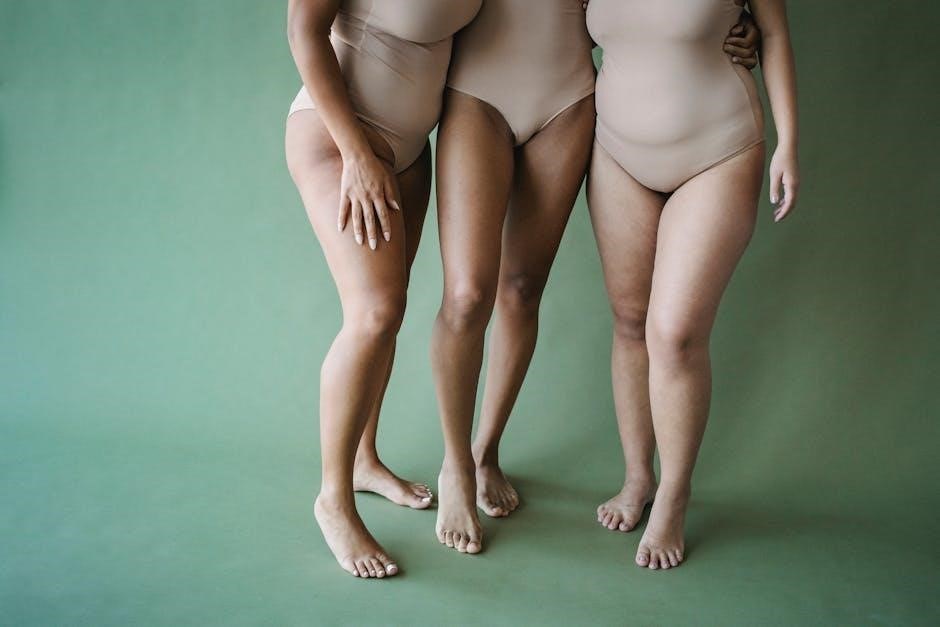
The pear shape, also known as triangle shape, is defined by wider hips and thighs than the shoulders and bust. PDF resources on female anatomy types consistently showcase this as a common body structure. A clearly defined waist is a hallmark characteristic, creating a noticeable difference between the upper and lower body.
These guides often detail that weight gain tends to concentrate in the hips, thighs, and buttocks. Measurements in these PDFs will typically demonstrate a larger hip circumference compared to the shoulder and bust measurements.
PDFs may also offer styling advice, suggesting ways to balance the silhouette by adding volume to the upper body. They might discuss how this shape responds to different exercise regimes. Understanding these traits, as presented in detailed PDF guides, aids in recognizing and appreciating the unique features of the pear body type.
Hourglass Shape – Defining Features & Proportions
The hourglass shape is characterized by a balanced proportion between the shoulders, waist, and hips. PDF guides dedicated to female anatomy types frequently highlight this as a classically defined silhouette. A key feature is a significantly smaller waist circumference compared to both the bust and hip measurements – often within 10 inches of each other.
These resources often include detailed illustrations demonstrating this proportional balance. PDFs will typically showcase measurements that are relatively similar for shoulders and hips, with a dramatically smaller waist.
Guides may also discuss how this body type responds to weight fluctuations, often maintaining a defined waist even with weight gain. PDFs may offer advice on clothing styles that accentuate the natural curves. Understanding these defining features, as detailed in comprehensive PDF resources, is crucial for accurate identification.
Rectangle (Athletic) Shape – Uniformity in Measurements

The rectangle, or athletic, body shape is defined by a relatively straight silhouette with minimal waist definition. PDF resources on female anatomy types emphasize the uniformity of measurements across the shoulders, bust, waist, and hips. This means these measurements are typically within a few inches of each other;
PDF guides often illustrate this shape with diagrams showing a lack of pronounced curves. They highlight that women with this build often have a more toned physique due to a naturally lower body fat percentage.
These resources may also detail how muscle mass can contribute to this shape, particularly in the shoulders and back. PDFs dedicated to this body type often provide fitness and styling advice geared towards creating the illusion of curves or enhancing existing athleticism. Accurate identification, as presented in detailed PDFs, relies on recognizing this consistent measurement pattern.
Round/Oval Shape – Characteristics and Health Considerations
The round or oval body shape is characterized by fuller midsections, with weight distributed primarily around the abdomen and torso. PDF guides on female anatomy types often detail this as a shape where the waist measurement is significantly larger than the hip and bust measurements;
These resources frequently emphasize the importance of health considerations associated with this shape. PDFs may discuss the increased risk of visceral fat accumulation, which is linked to metabolic syndrome and other health issues.
Illustrations within these PDFs often highlight the lack of a defined waistline. They may also provide information on healthy lifestyle choices, including diet and exercise, to manage weight and reduce health risks. Credible PDFs will stress that this shape isn’t inherently unhealthy, but requires proactive health management, offering guidance for a balanced lifestyle.

The Somatotype System: Three Fundamental Builds
The somatotype system categorizes bodies into ectomorph, mesomorph, and endomorph. PDF resources utilize this to understand metabolic rate, muscle-building potential, and fat distribution tendencies.
Ectomorph – Lean Build & Metabolic Rate
Ectomorphs are characterized by a naturally lean and delicate frame, often exhibiting long limbs and a smaller bone structure. Individuals with this somatotype typically have a fast metabolism, making it challenging to gain both muscle mass and body fat.
PDF guides focusing on the nine female anatomy types often illustrate the ectomorph with a slender silhouette. These resources detail how ectomorphs may benefit from strength training to build muscle and a calorie-dense diet to support weight gain.
Understanding the ectomorph type, as presented in these PDFs, is crucial for tailoring fitness and nutrition plans. They emphasize the importance of consistent effort and a strategic approach to overcome the metabolic challenges inherent in this body type. Illustrations within the PDFs frequently highlight the lack of defined curves in ectomorphs.
Mesomorph – Muscular Build & Athletic Potential
Mesomorphs possess an athletic build, naturally inclined towards muscle development. Women with this somatotype typically exhibit well-defined physiques, broad shoulders, and a narrower waist. They gain muscle relatively easily and can also lose fat efficiently, making them naturally suited for various physical activities.
“Nine Female Anatomy Types” PDFs often showcase the mesomorph as the ideal athletic form, detailing proportional muscle distribution. These guides highlight their responsiveness to exercise and ability to build strength.
PDF resources emphasize that mesomorphs thrive with a balanced diet and a combination of strength and cardiovascular training. Illustrations frequently depict a V-shaped torso and defined musculature. Understanding this type, as detailed in these PDFs, is key for optimizing training regimens and achieving peak athletic performance.
Endomorph – Higher Body Fat & Metabolic Considerations
Endomorphs generally have a softer, rounder physique with a tendency to store more body fat. Female endomorphs often have wider hips and a larger waist circumference. While they can build muscle, they may find it more challenging to lose fat compared to other somatotypes.
“Nine Female Anatomy Types” PDFs address the metabolic considerations for endomorphs, noting a slower metabolism. These resources often emphasize the importance of diet and consistent exercise for managing weight.
PDF guides frequently recommend a focus on cardiovascular exercise and a calorie-controlled diet rich in protein. Illustrations may depict a curvier body shape. Understanding the endomorph type, as presented in these PDFs, is crucial for developing effective weight management strategies and optimizing overall health.

Beyond the Basics: Expanding to Nine Types
PDF resources often combine shape and somatotype systems to define nine distinct types, acknowledging that individuals rarely fit neatly into single categories.
Combining Shape & Somatotype – Creating Hybrid Types
Understanding the interplay between body shape and somatotype is crucial when exploring the “nine types” concept, often detailed in downloadable PDF guides. These guides move beyond simple categorization, recognizing that most women exhibit characteristics of multiple types. For example, a woman might have an “hourglass” shape and a “mesomorph” somatotype, resulting in a muscular, proportionally balanced physique.
PDF resources frequently illustrate these hybrid types, showcasing how an “apple-shaped” individual can also be an “endomorph,” leading to a higher body fat percentage concentrated around the midsection. Conversely, a “pear-shaped” woman could be an “ectomorph,” resulting in a leaner build with weight primarily distributed in the hips and thighs.
These combinations offer a more nuanced understanding than either system alone, and PDFs often provide visual aids and detailed descriptions to help individuals identify their unique blend. This approach acknowledges the complexity of female anatomy and promotes a more personalized perspective.
The Role of Bone Structure in Type Determination
While shape and somatotype are key, comprehensive “nine female anatomy types” PDFs emphasize the significant influence of underlying bone structure. This foundational element dictates overall proportions and impacts how weight is distributed, often overriding purely shape-based classifications.
PDF guides often highlight how wider or narrower hips, shoulder breadth, and torso length contribute to a specific type. For instance, a woman with naturally broad shoulders might appear more “inverted triangle” shaped, even with a mesomorphic build. Similarly, a smaller bone structure can make an individual appear more “rectangle” shaped, regardless of fat distribution.
These resources may include illustrations demonstrating how different skeletal frames influence body silhouettes. Understanding bone structure is vital for accurate self-assessment and for interpreting the information presented in these PDF guides, moving beyond superficial observations.

Locating and Utilizing “Nine Female Anatomy Types PDF” Resources
Finding reliable PDFs requires searching online databases and medical websites. Critical evaluation is essential; assess authorship and the scientific basis before trusting any information presented.
Common Sources for PDF Guides (Online Databases, Medical Sites)
Locating comprehensive PDF guides on nine female anatomy types necessitates exploring several key online resources. Academic databases, such as PubMed Central and Google Scholar, often host research papers and related supplementary materials that may include detailed anatomical charts and classifications.
Reputable medical websites, like the Mayo Clinic and the National Institutes of Health (NIH), frequently offer patient education materials in PDF format, though they may not specifically categorize into ‘nine types’. However, they provide foundational knowledge on body composition and health considerations.
Specialized fitness and health platforms sometimes compile information into downloadable guides. Be cautious with these, verifying the credentials of the authors and the scientific backing of the content. University health centers and anatomical illustration websites can also be valuable sources. Always prioritize PDFs from established institutions to ensure accuracy and reliability.
Evaluating PDF Credibility: Authorship & Scientific Basis
When sourcing “Nine Female Anatomy Types” PDFs, critical evaluation is paramount. First, scrutinize the authorship – is it a medical professional, certified fitness expert, or researcher with relevant qualifications? Look for clearly stated credentials and affiliations.
Assess the scientific basis of the information. Does the PDF cite peer-reviewed studies, anatomical research, or established medical guidelines? Beware of guides relying solely on anecdotal evidence or unsubstantiated claims.
Check the publication date; more recent PDFs are likely to reflect current understanding. Examine the overall presentation – is it professional, well-organized, and free of grammatical errors? Cross-reference information with reputable sources to verify accuracy; A lack of transparency regarding sources or author expertise should raise red flags. Prioritize PDFs from trusted institutions.
Potential Content within “Nine Types” PDFs (Illustrations, Measurements)
“Nine Female Anatomy Types” PDFs typically offer a visual guide to understanding body composition. Expect detailed illustrations depicting each of the nine hybrid types – combinations of the five shape-based and three somatotype categories. These visuals often showcase front and side views for clarity.
Measurement charts are common, outlining how to take key body measurements (bust, waist, hips, shoulders) to determine your dominant type. Some PDFs provide average measurement ranges for each category.
Detailed descriptions of each type’s characteristics, including fat distribution patterns, metabolic tendencies, and potential health considerations, are also frequently included. Information on exercise and diet recommendations tailored to each type may be present. Look for PDFs that offer a comprehensive overview, combining visual aids with informative text.